
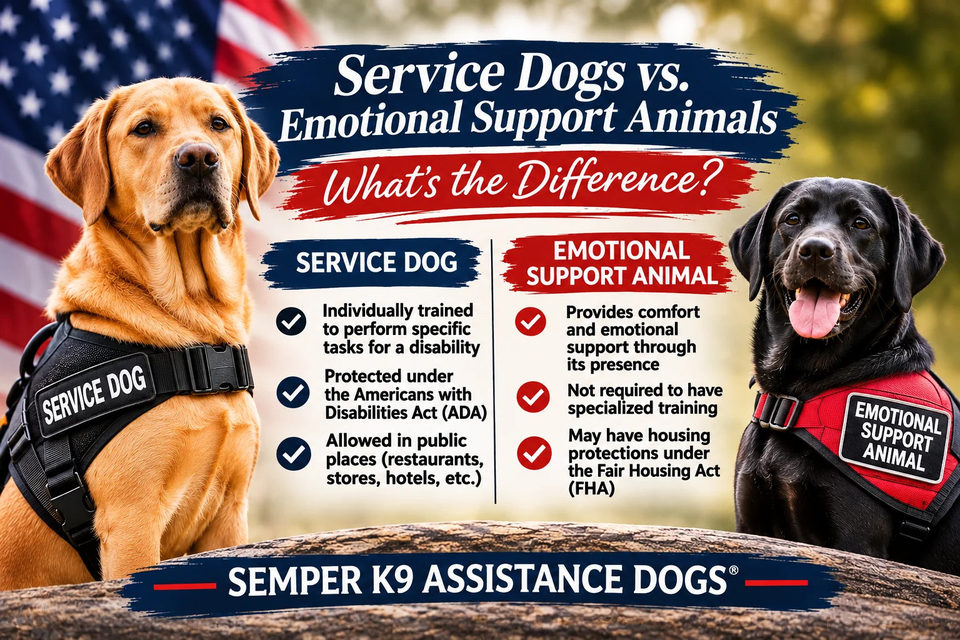
When it comes to service dogs vs. emotional support animals, many people assume they are the same. While both can provide meaningful benefits to individuals with disabilities, their training, responsibilities, and legal protections are significantly different.
At Semper K9 Assistance Dogs, we believe understanding these differences is essential to protecting the rights of service dog handlers and educating the public.
What Is a Service Dog?
Under the Americans with Disabilities Act (ADA), a service dog is individually trained to perform specific tasks that assist a person with a disability.
These disabilities may be physical, psychiatric, sensory, or neurological.
For veterans living with post-traumatic stress disorder (PTSD) or mobility limitations, service dogs can perform life-changing tasks, including:
- Interrupting anxiety-related behaviors through trained tactile responses.
- Retrieving medications, phones, or other essential items.
- Providing trained mobility assistance.
- Responding to specific symptoms associated with PTSD.
- Assisting with everyday activities that promote independence.
Unlike pets, service dogs undergo specialized task training to meet their handler’s disability-related needs.
What Is an Emotional Support Animal?
An emotional support animal (ESA) provides comfort, companionship, and emotional stability through its presence.
Emotional support animals can help individuals experiencing anxiety, depression, PTSD, or other mental health challenges.
However, unlike service dogs, emotional support animals are not required to receive specialized training to perform disability-related tasks.
Their primary benefit comes from companionship rather than trained assistance.
Although emotional support animals can provide important therapeutic benefits, they are not considered service animals under the ADA.
Service Dogs vs. Emotional Support Animals: Legal Rights
One of the biggest differences involves public access rights.
Under the ADA, trained service dogs generally have the right to accompany their handlers into public places, including restaurants, stores, hotels, and other businesses where animals are typically prohibited.
Emotional support animals do not receive the same federal public access protections.
However, qualifying emotional support animals may receive housing protections under the Fair Housing Act, allowing individuals with disabilities to request reasonable accommodations in housing that otherwise restricts animals.
Importantly, purchasing an online certificate, identification card, or vest does not automatically make an animal a legitimate service dog.
The ADA does not require service dogs to have official certification or registration.
Why Proper Service Dog Training Matters
At Semper K9 Assistance Dogs, our mission is to provide custom-trained service dogs to disabled American veterans at no cost.
Our training process focuses on developing reliable working partnerships between veterans and their service dogs.
Through our Family Integration Program, veterans participate in training that helps establish communication, trust, and teamwork.
A service dog must do more than provide comfort. It must reliably perform trained tasks that directly address its handler’s disability.
Understanding the Difference Makes a Difference
Both service dogs and emotional support animals can positively impact people’s lives. However, recognizing their distinct roles helps prevent misinformation and protects legitimate service dog teams.
Service dogs are trained working partners. Emotional support animals provide comfort through companionship.
Understanding that distinction supports greater accessibility, respect, and independence for individuals with disabilities.
To learn more about Semper K9’s mission and our service dog programs for veterans, visit www.semperk9.org.
Learn the difference between service dogs and emotional support animals, including training, ADA public access rights, and Fair Housing Act protections.